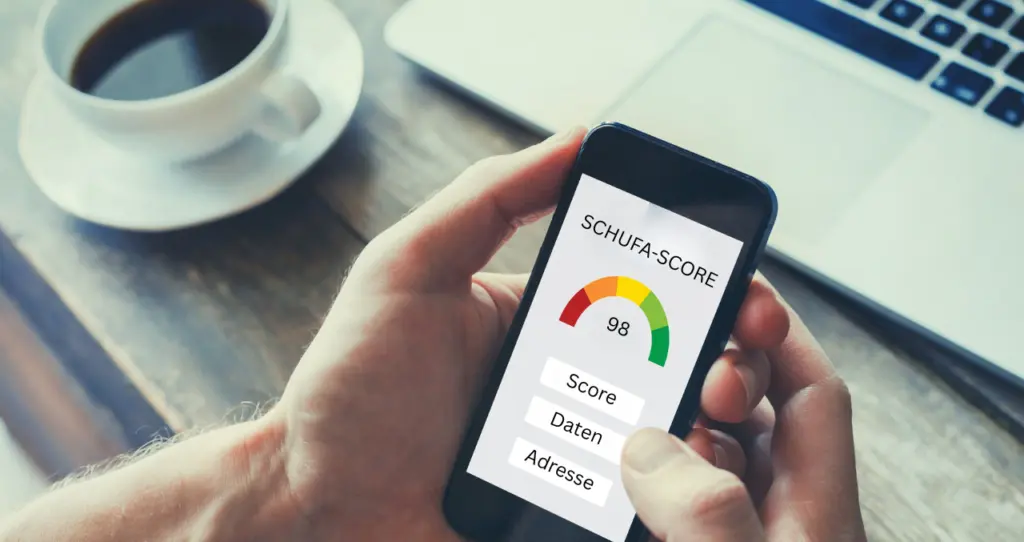
The apartment search, especially in big cities like Hamburg, is an application marathon. And it can drag on for quite a while. On top of that comes endless paperwork. Part of this paperwork is the well-known SCHUFA credit report. But why do landlords even want to see it? And what can you do if your report doesn't look quite so shiny?
Table of Contents
What actually is the SCHUFA report?
Let's start at the beginning. The SCHUFA (Schutzgemeinschaft für allgemeine Kreditsicherung) collects information about your payment behaviour. That may sound like Big Brother at first, but for most people it's simply a "creditworthiness certificate". It records whether you've paid bills on time, whether you have loans running, or whether you've ever received reminders for unpaid bills. From this data, the SCHUFA calculates your score, which is meant to reflect your creditworthiness. This value ranges from 0 to 100.
The SCHUFA Holding AG, as it is officially called, is based in Wiesbaden. It has existed since 1927 and has been a public limited company since 2000.
Why do landlords want to see the SCHUFA?
Property owners want to protect themselves. Anyone who has ever had a rent default knows how nerve-racking and expensive that can become. The SCHUFA report serves landlords as a kind of filter to get a first impression.
Imagine you were lending someone a valuable item. Wouldn't you also like to know whether the person is trustworthy and will most likely give the item back? That's exactly how landlords see their property – as a valuable investment they want to protect.
But: a poor SCHUFA doesn't automatically mean you won't get a roof over your head. It merely signals that the landlord might take a slightly closer look.
What's in the SCHUFA report?
Here's a brief overview:
- Personal details (name, address, date of birth)
- Current loans or leasing contracts
- Credit card or account information
- Mobile phone contracts
- Payment defaults or dunning procedures
- Your score (0 to 100%, the higher the better)
By the way, once a year you can order your data copy from the SCHUFA free of charge under Art. 15 GDPR. Go ahead and do it – it helps you spot errors early.
Which SCHUFA report do you need for the apartment search?
What you specifically need for the apartment search is the SCHUFA report for landlords. As of today (05/05/2025) this costs a one-off €29.95. In theory it's valid indefinitely, but landlords often insist that it should be no older than 2–3 months.
Suppose you're looking for a new home in a big city with a tight rental market: it's quite possible you'll therefore have to order it 2 or even 3 times over. Really annoying and it adds up, but unfortunately necessary.
You can order the report directly via the SCHUFA portal or through a third-party provider such as the Sparkasse. During the payment process you have to verify yourself with your ID. After that you can either download it directly as a PDF or have it sent to you by post.
What to do with a negative SCHUFA?
You've taken a look at your SCHUFA report and the result makes you swallow hard? Don't panic! Even with a less-than-ideal score you have chances on the rental market.
Step 1: Create transparency
First, check whether all the entries are correct. Errors do occur and can be corrected. Should you find unjustified entries, you can lodge an objection.
Step 2: Be honest
When you get talking to the landlord, be honest. Explain how the negative entries came about and what you've done to improve the situation. Nobody is perfect, and many landlords value honesty more than a flawless score.
Step 3: Emphasise your strengths
Do you have a stable income? Are you employed by your employer long-term? Can you provide references? All of these factors can speak in your favour despite a poor SCHUFA report.
Step 4: Offer additional security
In the case of negative entries, you can offer the landlord additional security:
- A higher deposit (by law, up to three months' rent is possible)
- Several guarantors
- Advance payment of several months' rent (if possible)
- Bringing alternative proof (see below)
Alternatives to the SCHUFA report – do they even exist?
Yes, but they're not always equivalent. If you can't or don't want to provide a SCHUFA report, you could offer the following alternatives:
- Rent payment confirmation from your previous landlord: Written confirmation that you always paid your rent on time can work wonders. This confirmation is also known as a certificate of freedom from rent arrears and is generally highly recommended.
- Proof of income: This shows that you can afford the rent.
- Guarantee: Parents or other trusted people can agree to step in if needed. This must always be put in writing.
- Tenant self-disclosure: A brief overview of your finances, neatly prepared. Makes a good impression.
The SCHUFA is important, but not everything
The apartment search can become harder with a negative SCHUFA report – but it isn't impossible. At the end of the day, landlords are looking for reliable tenants with whom they won't have any problems.
The SCHUFA report is just one piece of the bigger picture. Your personal impression, your reliability and your communication skills can often achieve more than a number on a piece of paper.